Parliamentary Ombudsman for Human Rights...

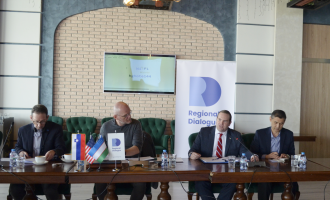
Regional Dialogue is implementing a USAID funded program focusing on technical assistance to Ombudsman’s institution in Uzbekistan. The program aims to strengthen the role of the Parliamentary Ombudsman for Human Rights (POHR) on the national level. It will offer technical assistance in strengthening Ombudsman's regional outreach, bringing together the POHR regional volunteers with representatives of local NGOs, local media and local administration. In addition it will build awareness on existing remedies offered to citizens through Ombudsman's institution.

The program will add to the existing justice reforms by review of further steps needed in legal reforms and practice protecting constitutional rights of citizens, and by focusing on judiciary framework assuring patients' rights.

Ombudsman's institution has a wide legal mandate allowing it to monitor and engage with direct interventions in different areas of human rights protection. One of its important functions is also addressing citizens' complaints. In recent years, the institution has expanded and upgraded its activities on the national level and has become more accessible for citizens, enlarging its staff in the capital and conducting regular open hours for citizens. Complaints are also received electronically or by mail. To be easier accessible to citizens in the regions, Ombudsman's office started to establish a network of volunteers in all other 13 regions of the country, mainly consisting of lawyers, teachers, medical doctors, civil society activists or other engaged individuals enjoying respect in their communities. By enlarging the reach-out to regional representation, prisons, hospitals and educational institutions, Ombudsman's office is in a stronger position to offer direct and more efficient assistance in concrete cases where rights of citizens are violated or abused. Ombudsman mainly receives complaints that have already been administratively or legally considered and where the applicant was not satisfied with the decisions taken accordingly.

Ombudsman also plays important role in raising legal awareness and promoting human rights both among population and among state officials. Ombudsman identifies gaps in the national legislation or inconsistencies between the existing legislation and international human rights standards, and makes relevant proposals for their improvement.

Ombudsman can supervise and monitor performance in respecting human rights standards and implementation of human rights legislation by state bodies and state officials, by local self-governance institutions (mahallas), by enterprises, medical and educational institutions and other governmental or non-governmental organizations. Ombudsman does not exercise control over their activities, but specifically focuses on respect of human rights standards, and can make recommendations, interventions with supervising institutions or public statements.

Link: http://ombudsman.uz/main-information  

Media, Government and Civil Society Dial...

Regional Dialogue is conducting a program entitled ‘Media, Government and Civil Society Dialogue in Uzbekistan’ financed by United Nations Democracy Fund.  The program is designed to enable a more vibrant dialogue between media and state institutions and also media and civil society. The project aims to strengthen the capacity of media to engage with government institutions and society and should also strengthen the skills of the media to become more dynamic, responsive and responsible and have a greater ability to reach out to the public. Hence media needs to first build a dialogue with government institutions and particularly the parliament to be able to provide quality information to be delivered to the public. Government officials and parliamentarians, on the other side, need to support the development of media and respect freedom of expression and opinion as the main path to a well informed and legally literate public.

 The program will consist of capacity building workshops for media and civil society as well as moderated dialogue sessions encouraging open discussion between media and government representatives and members of civil society.

 A conference entitled “Constitution and high legal culture – basis for democratic society,” co-organized by the Parliament of the Republic of Uzbekistan and Regional Dialogue was held as a part of this program on 14 November 2012. The event enabled lively discussions on topics such as the role of Parliament in a democratic society, raising legal awareness of citizens, strengthening the role of mass media and cooperation of Parliament with the media and civil society.

May 3rd – International Press Free...

This year Press Freedom Day was also celebrated with a national ceremony in Uzbekistan where different awards to journalists were given out. During preparations for the event, Regional Dialogue announced a special award for media coverage of human rights area. By the end of  April, 13 journalists submitted their  print and media reports to Regional Dialogue. Two journalists whose work displayed more courage and showed capacity for critical thinking, so crucial when monitoring respect of human rights, were awarded by Regional Dialogue for their contributions. These two journalists were Ruslan Sabirov, journalist from Navoi and Anorboi Norkulov, editor in chief of a newspaper from Syrdaria region. Director of Regional Dialogue Mjusa Sever handed  two digital cameras, provided by US Embassy, to both journalists at the ceremony in Tashkent on May 3rd.

[nggallery id=12]

RD Discussion Event

As part of its EU funded program entitled »Human Rights Dialogue in Uzbekistan«, Regional Dialogue conducted a public discussion event  on March 15th at Tashkent Palace Hotel in Tashkent. RD Director Mjusa Sever hosted two guests: Baroness Vivian Stern, member of House of Lords from United Kingdom and Senator Svetlana Artikova, Chairwoman of  the Senate of the Republic of Uzbekistan. Both guests,  being outspoken female politicians, with extensive professional record in advancing  human rights and justice reforms, talked about different areas of their special interest and shared their evaluation of the state of respect for human rights in both countries and the efforts leading to better protection of citizens.

Baroness Stern shared her experiences in addressing the issues of domestic violence in United Kingdom and discussed the support that the state needs to offer to victims of violence or crime. Senator Artikova shared her professional experiences about the ongoing process of reforms achieved  in  the area of criminal justice in Uzbekistan and  pointed out the need for stronger engagement of civil society and media in raising legal awareness and professional performance of govemrnent officials on all levels, that is needed for further efficient implementation of all legal reforms. Senator Artikova also described her own experience of reaching out to public and citizens as part of her work as senator.

The audience of more than 50 participants from different Uzbek government institutions, non governmental organizations, media, international organizations and diplomatic missions, including some experts of the EU project of assistance to judiciary reforms. During the Q&A period, the audience  actively participated in the inter-active discussion with the two guests,  putting questions to  Baroness Stern and Senator Artikova covering different areas such as mechanisms for human rights protection available in UK or in Uzbekistan, evaluation of the state of prisons both in United Kingdom and in Uzbekistan,  on engagement of civil society and civilian experts in working with prisoners during their serving of sentence  and following their release,  on the role of civil society and  state institutions in protection of victims suffering from domestic violence, human trafficking or as a result of other crimes, the need for awareness building and raising of state's obligations related to the conditions for disabled citizens, encouraging civic education about the role of democratic institutions among children (discussing ongoing project of children's parliament in Uzbekistan). Since several participants represented  socially active non govemrnental organizations working with  women, some questions for the guests also  inquired about the role and motivation of women in politics, in response to which both Baroness Stern and Senator Artikova shared their own personal feelings why they became active and publicly engaged. Senator Artikova stated that - as part of her parents' heritage and upbringing  in her native region of Namangan -  she wanted to be actively involved in the nation and state building of her country inspired by the desire that her children and grandchildren would be able to live in a safer,  just and better world.  Baroness Stern shared her experience with her mother, whose generation experienced attrocities, tragedies and hardships of the two world wars and was robbed of normal lives.  So her mother's instructions to the Baroness and her two sisters during her childhood years  were encouraging them try to do whatever they can to contribute to building a different, better and just world for all.

Baroness Stern also described her efforts in a country with almost thousand years of democratic rules where democratic practices nevertheless remain a task never fully accomplished . But she also pointed out to the Uzbek audience the unique opportunity that Uzbeks citizens have in comparison to those  living in  established democracies:  a new independent state that allows the people of Uzbekistan  to invest their efforts and talents to build their new nationstate according to their own visions, desires and identity that would provide Uzbek citizens to live in peace, prosperity and mutual respect and tolerance.

The event was part of Regional Dialogue program in Uzbekistan aiming to contribute to a more active role of civil society, raising political culture, freedom of expression and assembly with active cooperation between government and civil society leading to better protection and respect for  human rights.

[nggallery id=11]

Happy Easter!

Regional Dialogue wishes you a very happy Easter!

Page 1 of 41234